Your Field of Businesss
Where small, incremental improvements can create big, long standing results
Small Business Goals: Why Working Harder Isn’t Getting You Anywhere
Small Business Goals: Why Working Harder Isn’t Getting You Anywhere
You’re in at 7 and home at 7. The diary is full, the phone doesn’t stop, and on paper the business is doing well. But if someone asked you where the business will be in three years, could you answer? For most owners, the honest reply is a long pause. Without clear small business goals, every week becomes the same week, just a little more tiring than the last.
The electrician who only aimed for “busy”
Picture a Northampton electrician, eight years in. He has four vans, a loyal team and a full order book. Turnover is the highest it’s ever been. Yet last year he took four days off, and two of those were for a family funeral.
Ask him what his goal is and he’ll tell you: “To keep busy.” He’s achieved it, and it’s wearing him out.
So start somewhere different. Not with turnover, but with his life. What would a good Tuesday look like in three years? He wants to be on site three days a week, not six. He wants Fridays with his kids. He wants to stop doing quotes at 10pm.
Once he writes that down, decisions get easier. The small, awkward jobs across the county that eat whole days stop making sense. He raises his minimum call-out charge, focuses on commercial contracts closer to home, and starts training one of his team to run the second crew. Turnover doesn’t fall. His hours do.
What’s really going on
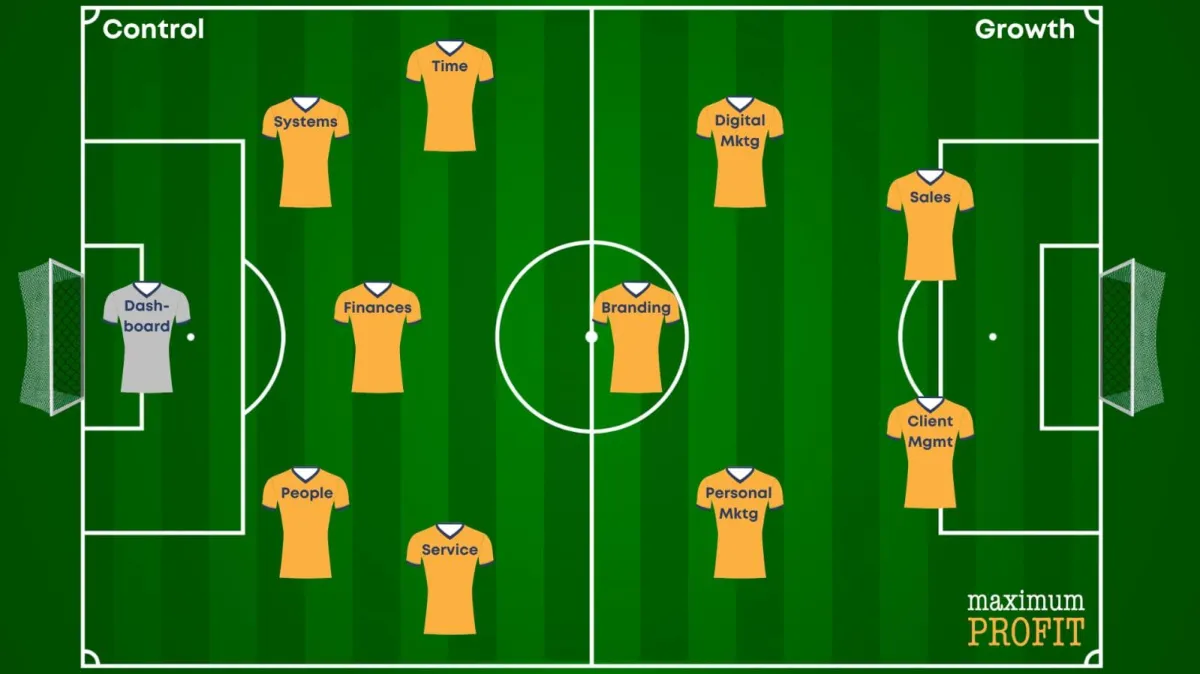
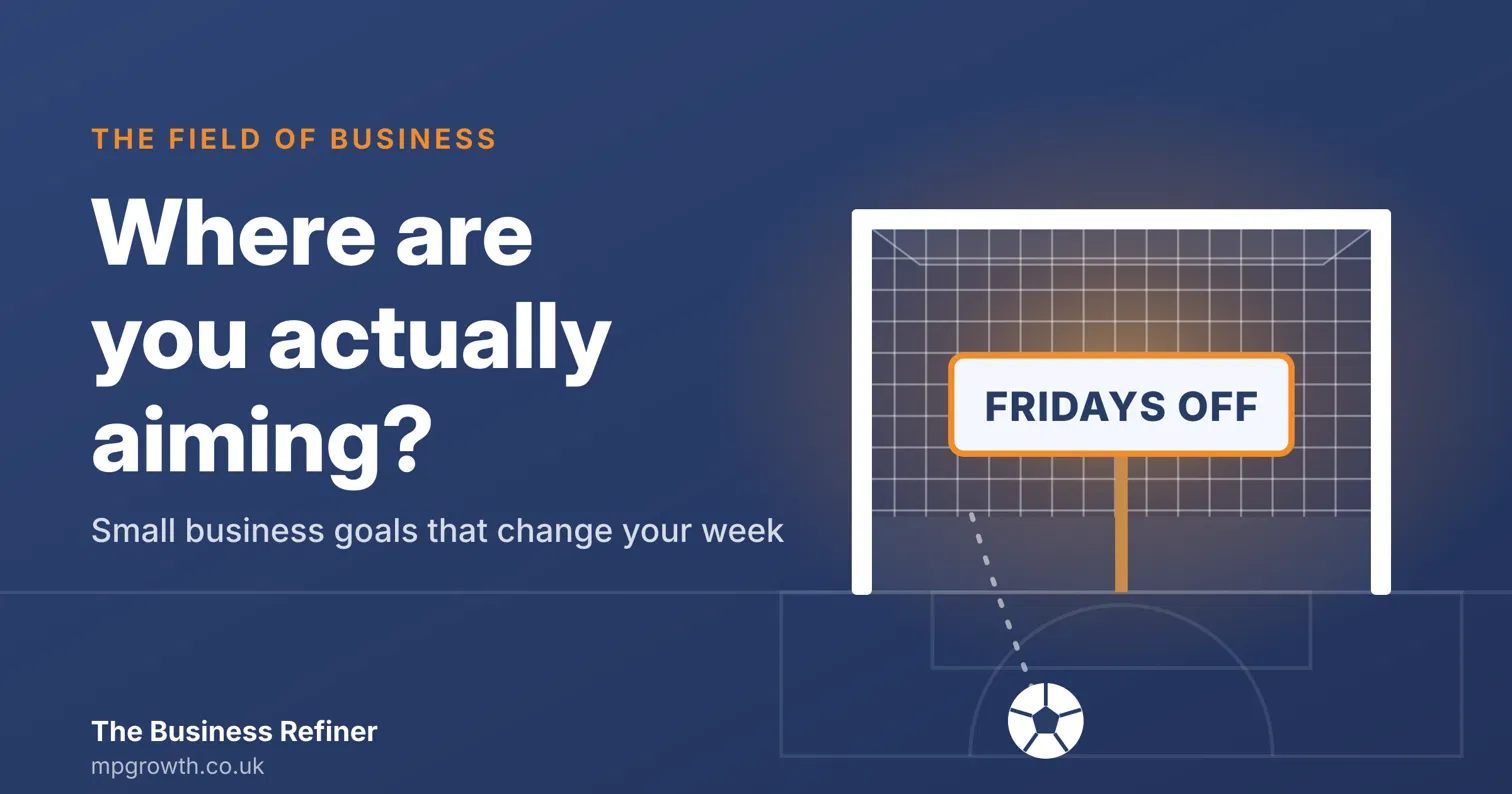
In The Field of Business, Future Goals is the goal you’re attacking. It’s the net at the far end of the pitch. If it isn’t clearly marked, your whole team runs around with energy but nowhere to shoot.
Most owners never set proper goals because they’re too busy playing the game. They react to whatever lands in the inbox. Being busy feels like progress, but it’s just movement. Without a destination, there’s no way of telling whether today’s work moves you closer or further away.
It’s also why so many owners feel stuck at the same level for years. The business has grown to fit the hours they have, and it can’t grow any further without a different plan.
Start with the life, then build the business around it
The business is there to serve your life, not the other way round. So start with the life you want: the hours, the holidays, the income and the kind of work you enjoy. Be specific. “More time off” is a wish. “Every Friday off and six weeks’ holiday a year” is a goal.
Turn it into numbers
Next, work out what the business needs to deliver to pay for that life. How much profit do you need? How many hours are you prepared to work for it? That gives you a target you can measure. If you want £80,000 profit from a four-day week, you can work backwards to the prices, the type of customer and the number of jobs you need.
Pick the one thing that has to change this year
You don’t need a 40-page business plan. You need to know the one change that would make the biggest difference this year. It might be raising prices, hiring help or dropping a type of work that drains you. Choose one, and give it your full attention for 90 days.
Try these this week
Write your ideal working week on one page.Include your hours, your days off, the work you love and the work you’d happily drop.
Put a number on next year.Write down the profit you want and the maximum hours you’ll work to earn it.
Tell one person your goal.Say it out loud to your partner, a friend or a business owner you trust. A goal you’ve shared stops being a daydream.
The first move
Setting goals isn’t a once-a-year exercise you forget by February. It’s the thing that tells you which jobs to take, which customers to chase and where to spend your time every week.
If you’d like help working out where your business should be heading, and the first steps to get there,book a free Refinery Review. In one hour, you’ll leave with three wins that give you more time, more money, or both, this month.
Future Goals is one of the positions in my book,The Field of Business, along with 20 practical strategies you can put to work straight away.
Run your business consciously. Refine it continuously. Live YOUR life.